Provenance and the Certified Burst
“Provenance.” From the Oxford Languages Dictionary: “A record of ownership of a work of art or an antique, used as a guide to authenticity or quality.”
In the world of vintage guitars, provenance is of the utmost importance. Knowing the history of an instrument and verifying its authenticity is the foundation of the vintage guitar business. I’d like to take this opportunity to write about an incredibly unique instrument in the pantheon of collectable guitars.
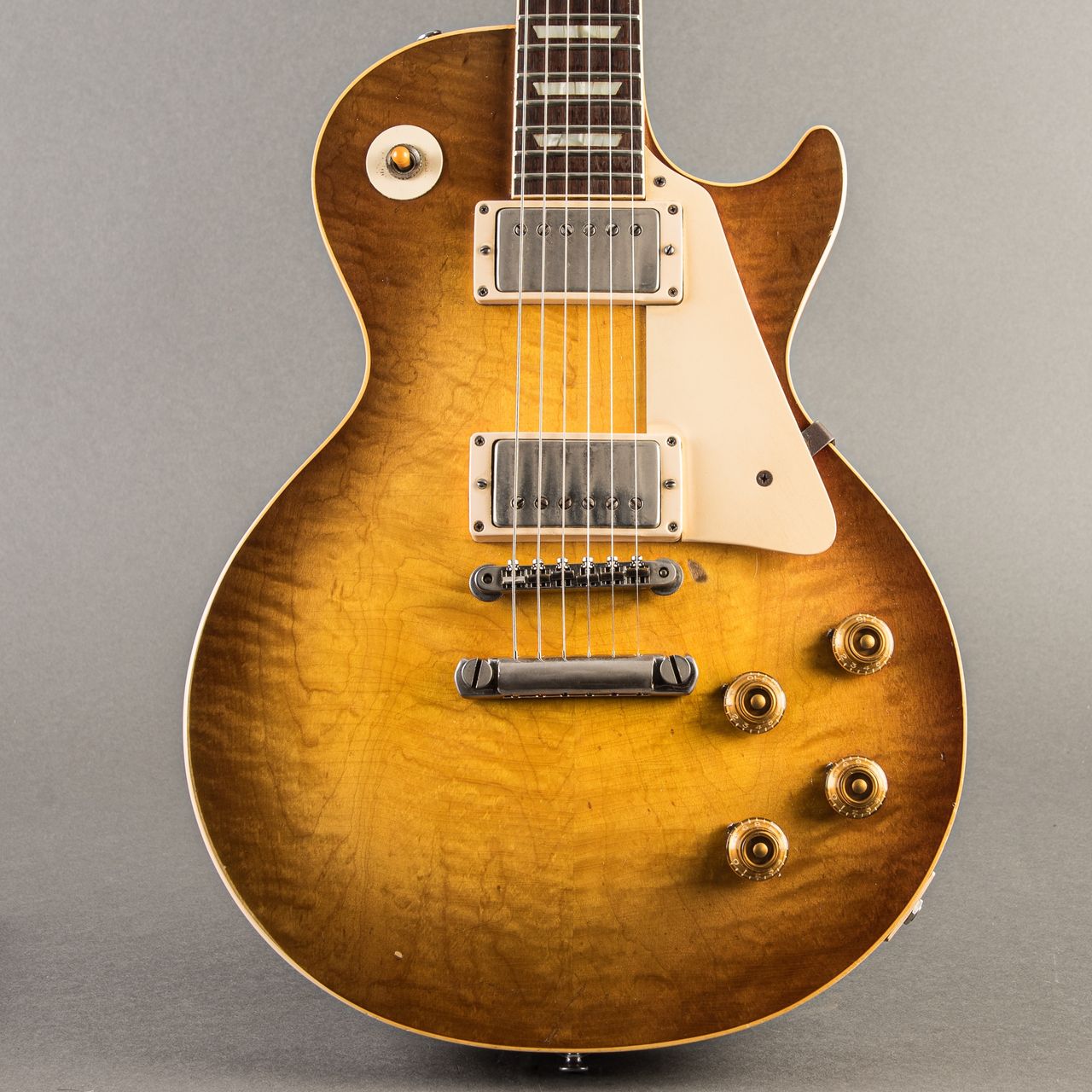
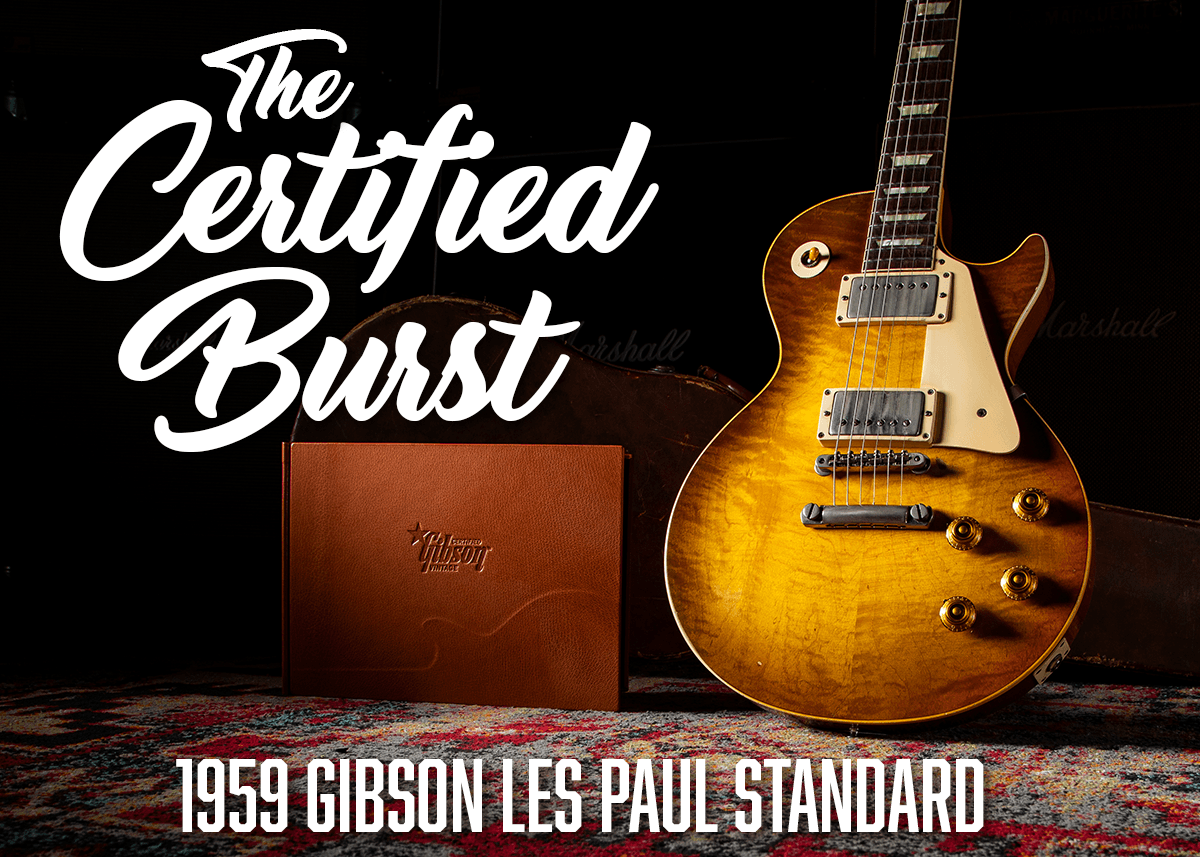
In the long and storied history of the Gibson Guitar Company, said company has certified the originality of exactly one instrument. Yes, you read that correctly… one guitar. Since the late 1890s Gibson has put their Official stamp of approval on exactly one instrument. The guitar is a Les Paul Standard , a, “Burst” made in the year, 1959.
That very guitar is currently for sale at Carter Vintage Guitars here in Nashville. I call it the, “Certified Burst.” I’d like to take a second to thank the Rev. Willie F. Gibbons for the naming inspiration. I was just listening to ZZ Top and, “Certified Blues” came on. Certified blues… Certified burst. Thanks Billy! And remember: A good artist borrows, a great artist steals. Not that I’m some sort of Hemingway but I do love to write and I love guitars. Man, I love this job.
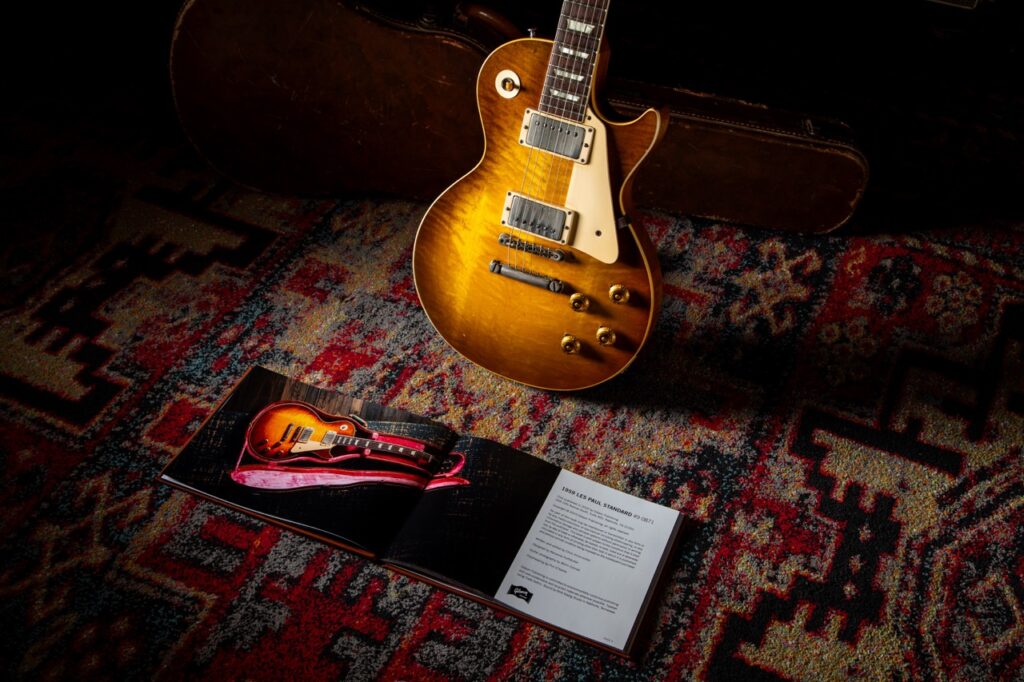
Ok, enough love, back to the subject at hand.
Provenance and authenticity are the coin of the realm in the collectable guitar world. Provenance is a little harder to come by. For the most part, you have to know the original owner of the guitar in order to obtain it’s full provenance and history. Provenance can still come by subsequent owners telling the story of the original owner but with each recounting of the story it becomes a bit more watered down. Eventually, with some instruments the story disappears altogether. Most of this watering down of the story process happens when the guitar, as we say in the business, “Makes the rounds.” Or, is repeatedly sold from person to person.
Another way to establish an instrument’s provenance is by seeing it’s serial number recorded on the manufacturer’s production logbooks. There are logbooks at Gibson that cover many of their production years during the golden era. Some years in the Gibson logs are missing though. There are no logbooks for Fender whatsoever. Martin, and some other manufacturers appeared to keep excellent logs of their instruments over the years.
Let’s set aside provenance for a minute and talk about authenticity. Authenticity is a little easier to come by. Authenticating a guitar is basically comparing the instrument to a checklist.
Most instrument authenticators have a little checklist that’s either written down, or in their memory, for what they want to see vis a vis a certain maker’s instruments. I saw my old friend Joe at the store today. I’ve known Joe for decades. How did I know it was Joe? Because Joe looks like Joe. Authenticating guitars is basically the same thing; it’s like recognizing a familiar face. A vintage Gibson from the 1950s has certain identifying characteristics that have to be in place for the guitar to be, a vintage Gibson from the 1950s. All this comes with experience. Authenticating guitars is based on experience. The more experience the authenticator has, the better. You can look at a million pictures on the internet. You can buy every vintage guitar book known to man and you know what? None of that really helps. There is nothing that compares to actually examining a guitar up close and in person.
And sometimes you don’t even need your eyes.
Authentication tip! Gather ‘round, I’m giving you some knowledge straight from the chef… smell the guitar. No, no, no… not the glove! We’re not talking Spinal Tap, forget those guys for a minute. Old guitars have a scent. They all do. “Grandma’s house” is what I call it. That’s the old musty smell I associate with vintage guitars. Some have a faint whiff of it, some take you straight to Grandma’s old Victorian house downtown and just put you there. Old guitars smell kinda funky. It’s a fact. If you don’t come across that particular scent with an old guitar, be very cautious and suspicious. When you put your nose right down in the guitar do you smell the musty thing, or fresh lacquer? Maybe fresh solder? Maybe you smell some really good cologne? That’s one of Isbell’s guitars. The olfactory sense, ie… scent, is another tool in the authenticator’s tool box. It’s an important one. If you stick your nose down on an old guitar and get anything other than the musty smell, beware.
When I look at a vintage guitar to determine its authenticity, I’m basically looking for the same things in the guitar, that I look for in a friend. My buddy Joe doesn’t look like my old friend George. Neither one of those guys looks like my pal Webb. They all have their own set of features and characteristics that make them who they are. Guitars are similar in that aspect. Gibson built guitars with a certain set of characteristics that are generic to that brand, and only that brand, of guitars. Gibson didn’t make guitars like Fender. Fender didn’t make guitars like Gibson and neither of those two companies made guitars like Martin. Authentication comes down to time and experience. The more time you put in and the more instruments you look at the better your chances are of accurately authenticating something. It still doesn’t mean I get it right 100% of the time. We have a team of excellent authenticators at Carter Vintage and sometimes it takes, “All the available eyes” to get to the truth about a guitar.
With the advent of the vintage guitar as a collectable, as well as an investment, we’ve also seen the rise of the advent of the vintage guitar as the, “Fugazi.” Ie: the fake. There’s a lot of money, in some cases huge amounts of money, involved in vintage guitars these days. Many vintage guitars are an insanely great investment. The iconic models literally go up. That’s all they do, they go UP! Ever heard of the price of sunburst Les Pauls… falling? Yeah, me neither. They don’t go down. Think about that. A burst is probably one of the most bulletproof/sure-thing investments there is out there. I’ve been asked countless times by friends and acquaintances, who just had their ship come in, “What do I invest in?” I always tell them the same thing, buy land and sunburst Les Pauls. The right parcel of land, in the right place, is the golden ticket. A Burst? Same deal, they literally can’t fail.
Along with these wonderful investment guitars, we’ve also seen the rise of some incredibly talented people making vintage replicas. These replicas have their place in the guitar world. Personally, I think that they’re a wonderful thing. I don’t know about you but I don’t have anywhere near the number of zeros in my bank account that would allow me to buy a vintage burst these days. A replica guitar that looks, feels and maybe even sounds like the real deal; for a fraction of the cost? That’s a wonderful thing, sign me up. God bless Tom Murphy, the folks at the Murphy Lab at Gibson, and the Custom Shop at Fender. They bring some incredible guitars to us, the guitar loving public, and they’re affordable.
That wonderful replica thing is all well and fine until one of those replicas crosses the line and is passed off as the real deal.
The worst part about my job is having to tell someone that their instrument, sometimes it’s something that’s part of their retirement portfolio, is not what that think it is. Luckily, that happens only once in a blue moon. It’s a very seldom thing to have someone bring a guitar to us to sell, or appraise, that’s not what it’s supposed to be. It’s the part of my job I seriously dislike; it’s the ugly part. It is not fun, not at all, to tell someone that the guitar they bought twenty years ago, with the right logo on the headstock, with the right finish, with the right parts… is not the right guitar. Their “Fender” never saw the light of day on Raymond Street, their “Gibson” was never anywhere near Kalamazoo, their “Martin” never saw the inside of the Nazareth factory.
Like I said, it’s the ugly and painful part of my business. It’s why I have to be careful. Careful and suspicious. I never get all puppy dog excited when a customer, or even someone from the store, brings me a vintage instrument to look at. My first thought, and it has to be this way, is this, “What kind of jive, fake fugazi am I going to look at now?” To someone in my business, every instrument is a fake until proven otherwise. Luckily, proving otherwise is usually as easy as seeing an old friend, remember my buddy Joe? The real deal always looks like the real deal. That’s the wonderful constant in this business. The real deal was established years ago and it’s unchanged to this day. A sunburst Les Paul has a certain set of characteristics that must be present for it to be an original sunburst Les Paul. Same for a blackguard Tele, same for a Herringbone Martin, same for a 1957 Strat. All these things never change. Sometimes there’s subtle variations but even those are few and far between.
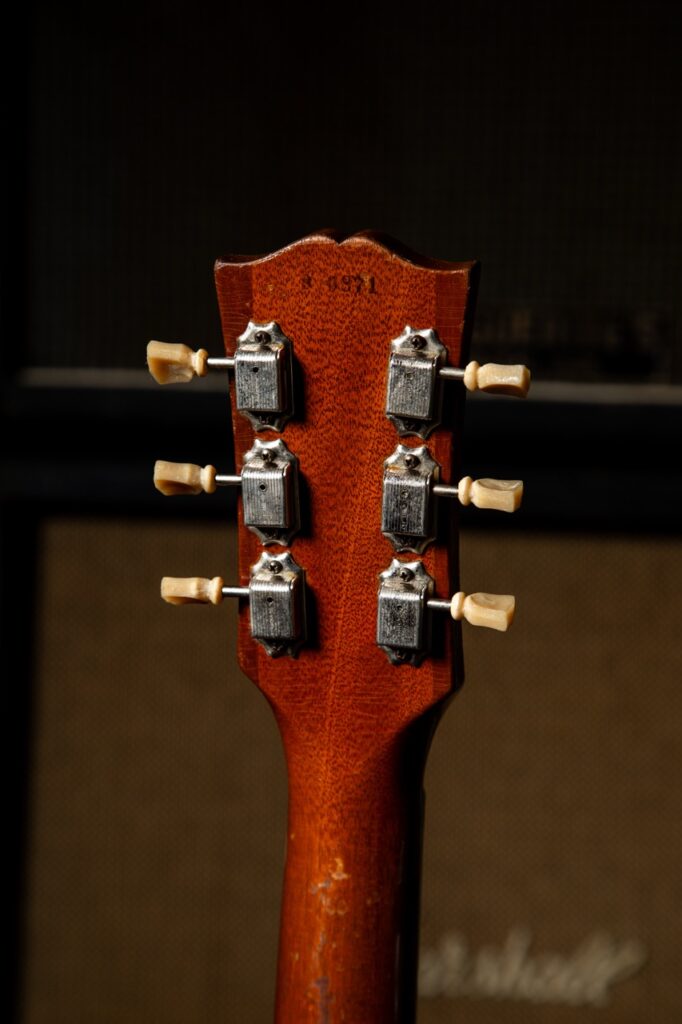
What does it mean to have a 1959 Les Paul Standard authenticated by the company that made it in the first place? In my humble opinion? Everything. Think about having this guitar. These days it’s possible to be skeptical of just about anything but you can’t be a skeptic when it comes to a burst that’s been given the Gibson company’s stamp of approval. It’s literally the gold standard for collectible instruments.
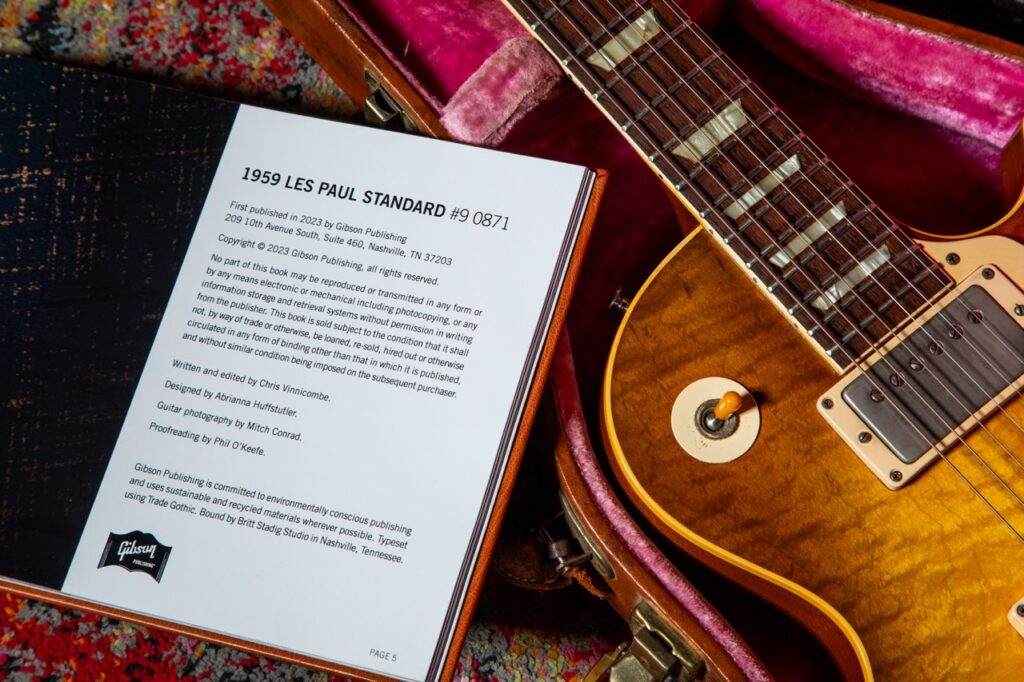
The guitar comes with a really cool book from Gibson. In the book the provenance is discussed, every nuance and characteristic of the guitar is examined, stories about the instrument are volunteered, stories about storied Gibson employees – (what’s up Murph?) – are told. It’s a totally fun read if you’re into guitar history. I’m not sure if there’s more than a few copies of the book though? Maybe Gibson will put it in circulation one day soon? What say you Massman Drive? I bet that book would be a hit.
I’m having all these names come to me all of a sudden. The, “Gold Standard.” “Bedrock Burst.” “The Proof.” Do you guys know what a proof is? In coin collecting a, “Proof” is the standard by which other coins are compared. That certainly describes our guitar. It’s literally the sunburst standard by which to judge all others.
Maybe we should just call it, “The Burst.” Because, that’s what it is.
It’s been an honor and a privilege to share this with you. Thank you very much for reading. Until next time…
Gary Bohannon
Carter Vintage Guitars
Spring, 2025